


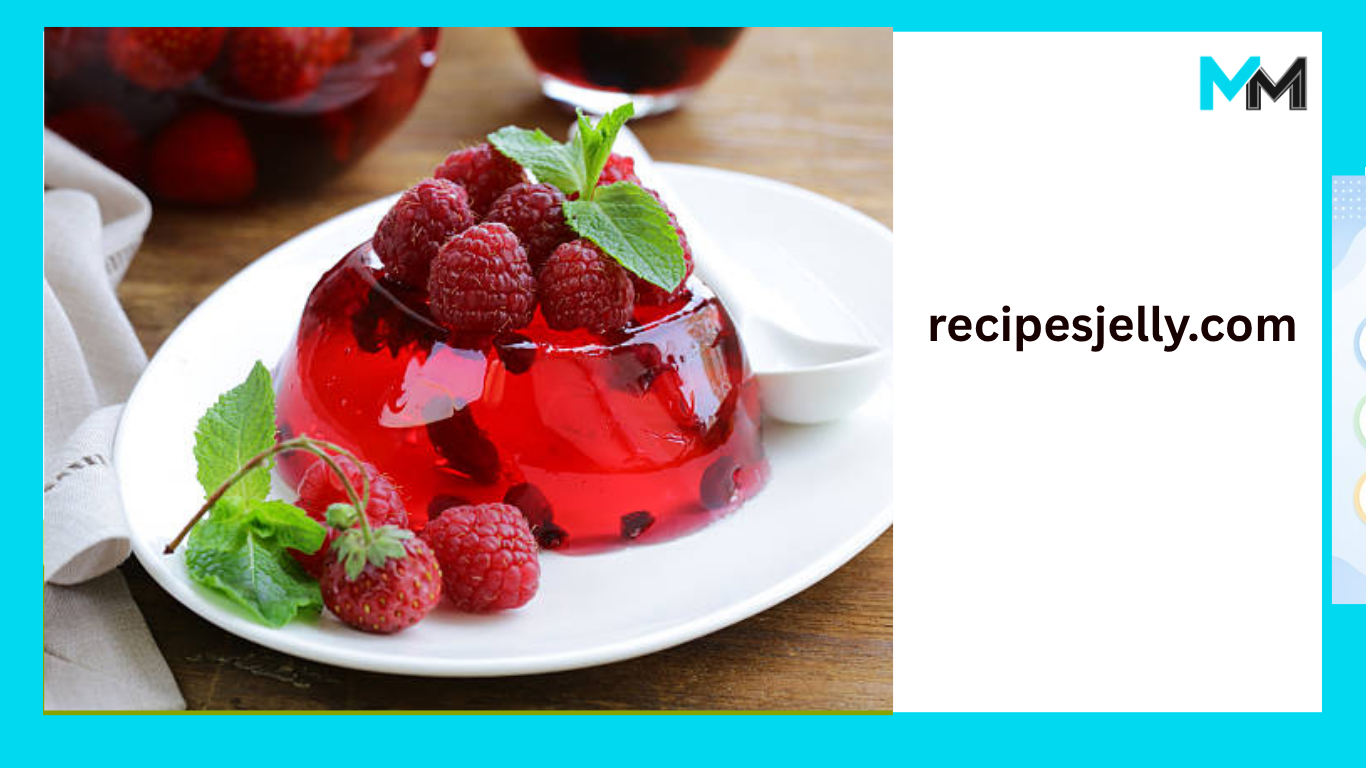
Making jelly at home is one of the satisfying things someone can do in the kitchen. There is a joy in taking fresh fruit, sugar and a little bit of time and turning it into a shiny easy-to-spread jar of taste. This jar can make toast better add flavor to desserts and even work with some dishes. At recipesjelly.com the idea has always been simple: help regular people make dependable jelly without needing special tools or a lot of experience, with canning.
This guide, based on the way recipesjelly.com thinks about making jelly shows all the things you need to know when you start making jelly from scratch. It explains the science of jelly the things you need to use how to do it step by step flavors you can try how to keep jelly safe and what to do if something goes wrong. Whether you are just starting out or trying to get better at making jelly this article is meant to be something you can use over and again as you work on your jelly-making skills.
What Makes Jelly Different from Jam, Preserves, and Marmalade
Before you start making recipes it helps to know what jelly really is. People often use the words “jelly ” “jam,” and “preserves” the way but they are not the same thing at all.
- Jelly is made from fruit juice that has been strained. That means all the solid parts of the fruit are taken out. Because of this jelly is smooth and clear. You will not find any fruit bits in jelly.
- Jam is made from fruit that has been crushed or chopped. That is why jam is thicker and has a texture. You can see pieces of fruit in jam.
- Preserves are different again. They have pieces of fruit— fruit—sitting in a thick sugary syrup. They have a fruity look and texture.
- Marmalade is usually made with citrus fruits like oranges or lemons. It includes the peel, which gives marmalade a taste and a textured feel. Marmalade is not smooth like jelly. Marmalade is quite distinctive.
The smoothness of jelly comes from removing all the fruit pulp and seeds before jelly sets. This makes jelly look shiny and clear. Jelly spreads easily on bread or biscuits. Jelly is the kind of spread you see in a glass jar that looks perfectly smooth and looks great on a plate. Jelly is, about that look.
The Science Behind Jelly: Pectin, Sugar, and Acid
When I see fruit juice change into a spreadable gel I feel like I am watching magic.. Jelly is really just a simple chemical process that uses three main ingredients.
Pectin
Pectin lives inside fruit. Makes jelly firm. Apples and citrus have a lot of pectin already. Strawberries and cherries have pectin too. They usually need more pectin added so that jelly sets correctly.
Sugar
Sugar is not just for sweetness. Sugar helps pectin molecules stick together to build the gel structure. Sugar also acts as a preservative giving jelly a shelf life.
Acid
Acid, from lemon juice activates pectin and balances the sweetness of jelly. If there is no acid jelly may become too sweet. May not set properly.
Understanding the balance of pectin, sugar and acid is the basis of every recipe that I find on recipesjelly.com. That understanding explains why different fruits behave differently when jelly is cooked.
Essential Tools for Making Jelly at Home
You do not need an equipped commercial kitchen to make great jelly but a few basic tools will make the jelly process much easier and more consistent. I find that having these tools ready before you start makes a difference.
- A large, heavy-bottomed pot helps prevent scorching while boiling jelly.
- A jelly bag or fine cheesecloth is used to strain fruit juice for jelly.
- A candy or jelly thermometer that measures candy or jelly temperature lets you track the setting temperature accurately.
- Canning jars with lids keep jelly. Preserved.
- A ladle and funnel help transfer jelly into jars cleanly.
- A jar lifter is useful if you plan water-bath canning for long-term storage of jelly.
Having these tools ready before you start prevents last‑minute scrambling once your fruit mixture’s, on the stove because jelly‑making often needs quick precise timing.
Step-by-Step Basic Jelly-Making Process
While different fruits have their special recipes the general way to make jelly stays pretty much the same. Here is the basic method that most recipes, including those found on recipesjelly.com, use.
- Prepare the fruit. Take out any stems, seeds or parts that are not good anymore.
- Extract the juice gently with a water until it gets soft then squeeze out the juice using a jelly bag or cheesecloth and let it sit overnight.
- Measure the juice carefully because most recipes depend on amounts of juice and sugar.
- Combine juice, sugar, and acid together in a pot and heat it up until it starts to boil hard.
- Add pectin if you need it. Keep boiling until the mixture gets thick enough to set.
- Test for doneness using the cold plate test or by looking at a thermometer that shows, about 220°F (104°C).
- Pour into sterilized jars leaving the right space at the top and close the jars right away.
- Process in a water bath, if you want to keep the jelly for a time put the jars in a water bath or just keep them in the fridge for a shorter time.
By following these steps you can make a jelly that is always good and set properly no matter what kind of fruit you are using.
Tried-and-True Jelly Flavors Every Home Cook Should Master
When the basics start to click most people are drawn to a classic flavors first. These are not always the fancy choices but they are the ones that teach the most about how jelly behaves. They are also the flavors that most people grew up eating.
Grape Jelly
Grape Jelly shows up in every household at some point for a reason. Concord grapes provide pectin and enough acidity so the setting process goes smoothly even for a first time jelly maker. The color alone. A almost purple‑red shade. Makes the product feel finished and worth showing off.
Apple Jelly
Apple Jelly is one of the places to start. Apples contain pectin so this batch often sets up without extra help. The flavor is mild and slightly floral. That is part of why Apple Jelly pairs with warm bread or a simple butter cookie.
Strawberry Jelly
Strawberry Jelly is a story. Strawberry Jelly tastes incredible. Strawberry Jelly does not contain much natural pectin. A bit of added pectin and a splash of lemon juice usually make the difference between a jar that sets and one that stays runny. Strawberry Jelly is a trickier recipe but the payoff. Bright red color and sweet familiar taste. Makes the extra step worth it.
Blackberry Jelly
Blackberry Jelly brings a deep, wine‑like flavor but Blackberry Jelly contains tiny seeds. Properly straining Blackberry Jelly juice is not optional; it is the difference between glossy jelly and jelly that feels gritty on toast. Take the time with the straining step and Blackberry Jelly turns out beautifully.
Raspberry Jelly
Raspberry Jelly has one of the intense true‑to‑fruit flavors on this list. Like Strawberry Jelly Raspberry Jelly is low in pectin so most home cooks add pectin to get a reliable set. The color is worth the effort. A almost jewel‑toned red that looks as good as it tastes.
Peach Jelly
Peach Jelly is the favorite, for people who find berry jellies a little too sweet or too tart. Peach Jelly has a more rounded flavor with a slight floral note. Peach Jelly goes well with warm biscuits or a simple weekday breakfast.
A Few Less Obvious Jelly Flavors Worth Trying
When the classic jelly feels comfortable branching out into traditional flavors is where jelly‑making becomes truly creative. I love how jelly‑making can shift from familiar to exciting with a new ingredient.
- Jalapeño jelly. Sweet with a real kick of heat, especially good spooned over cream cheese with crackers.
- Mint jelly. A traditional pairing alongside roasted lamb though it works just as well with grilled dishes.
- Rosemary or basil jelly. An herbal twist that feels more grown‑up, often served alongside cheese boards.
- Red wine jelly. Deep slightly complex and a nice option for gifting during colder months.
- Mixed citrus jelly. A combination of orange, lemon and lime for something tangy and bright.
None of these need to be intimidating. They follow the basic process as the classic jelly. Juice, sugar, acid, pectin. Just, with a different starting ingredient.
Case Studies: How Different People Actually Approach Making Jelly
Everyone gets into jelly-making in their way and it helps to see how different people start.
Someone who’s never made jelly before usually has the time with apples or grapes. These fruits are forgiving, have plenty of pectin and don’t need a lot of fixing along the way.
Someone who has much fruit from a garden or a farmers market often makes jelly just to keep it from going bad. Here the key is working in batches and sticking to safe canning rules not picking a wild flavor.
Someone making jelly to give as a gift cares a lot about how it looks much as how it tastes. That’s when you see unusual kinds. Like spiced pear, cranberry-orange or a jelly made with herbs. These feel special on a kitchen counter.
Someone who wants to use sugar often chooses low-sugar pectin instead of giving up sugar completely. Sugar isn’t, for sweetness. It helps the jelly set. Without it the jelly might never thicken, with the right pectin.
Mistakes That Trip Up Even Careful Cooks
A few little mistakes cause jelly problems and almost all of them are easy to stop once you understand what to watch for.
- Taking the jelly off the heat before it actually gets to the temperature
- Making a batch thats too big which causes the cooking to be uneven
- Not doing the straining properly or rushing through it which makes the jelly look cloudy or feel rough
- Using fruit that is too ripe or not ripe enough both of which mess up the natural pectin and acid levels
- Using jars again without cleaning them properly first which makes the jelly go bad faster
None of these errors destroy a batch forever. Most can be fixed by cooking it again adding more pectin or using a little more lemon juice.
When the Jelly Just Won’t Set
This is probably the common frustration in jelly-making and it almost always comes down to one of a few things:
- Not enough natural or added pectin for that particular fruit
- The mixture never actually reached the right boiling temperature, typically around 220°F
- Not enough acid, which stops pectin from binding properly
- Doubling a recipe, which throws off the ratios that made the original version work
A batch that hasn’t set isn’t a lost cause. Pouring it back into the pot with a bit pectin or lemon juice and bringing it back, to a boil usually solves the problem.
Keeping Jelly Fresh Once It’s Made
How you store your jelly matters as much as how you make it.
- In the fridge jelly keeps well for a weeks. No canning is needed all.
- Water-bath canned jelly can last safely at room temperature for up to a year. Long as the seal stays intact it stays safe.
- Frozen jelly is a choice for anyone who wants to skip the canning process.. It must be in freezer-safe containers.. Make sure there’s room, for expansion.
- Always check that a jar has actually sealed before putting it for long-term storage. If it hasn’t sealed, put it in the fridge. Not the pantry.
Using Jelly for More Than Just Toast
I think Jelly is more versatile than most people think it is.
- Mix Jelly into yogurt. Oatmeal to add a fast flavor boost.
- Spread Jelly over chicken or ham to make a glaze.
- Put Jelly in the middle of thumbprint cookies before you bake them.
- Blend Jelly into a vinaigrette, for a bit of sweetness.
- Offer Jelly with a cheese board for a snack.
Making Jelly Feel Like a Real Gift
A jar of jelly can feel more thoughtful, than something you just pick off a shelf especially when you put a little extra work into how it looks.
- Simple glass jars decorated with ribbon or fabric covers
- A tag that says what flavor it is and the date it was made
- A group of two or three different flavors all together
- Matching a jar with fresh bread or biscuits to make a better gift
Final Thoughts
Jelly-making rewards patience more than perfection. When you learn how pectin, sugar and acid work what once felt like guesswork starts to make sense. It becomes easier to trust the process. Begin with something forgiving like apple or grape jelly. These are kind to beginners. Help you get comfortable. Once you feel at home let your curiosity guide you. Try fruits and flavors that interest you. Let your taste and experience shape the steps. There’s no rush. The joy is, in the making, not the result.
Frequently Asked Questions
- Is a jelly bag necessary, or can I use something else?
A jelly bag helps make straining easier. You don’t need one. A few layers of cheesecloth placed over a strainer work as well. Many home cooks use this method. Get great results.
- Can jelly be made without adding pectin?
Yes, if the fruit naturally has a lot of pectin—like apples or citrus fruits.. For fruits with low pectin, such as strawberries or raspberries adding pectin is usually needed to get the jelly to set properly.
- How long does homemade jelly actually last?
If stored in the refrigerator homemade jelly lasts a weeks. If you properly water-bath can it and seal the jars it can last up to a year. Always keep it in a cool spot for best results.
- Why did my jelly turn out cloudy?
Cloudiness often happens when fruit juice is squeezed hard through the straining bag. This forces pulp and tiny particles into the liquid. Let the juice drip naturally of pressing it. That helps keep the jelly clear.
- Can sugar be reduced in a jelly recipe?
You can reduce sugar. Only if you use a special kind of pectin made for low-sugar or no-sugar recipes. Sugar is not just for sweetness—it helps the jelly form a gel. Without sugar the jelly may not set.
- What’s the real difference between freezer jelly and canned jelly?
Freezer jelly skips the boiling and canning process. It’s made to be stored in the freezer. It tastes fresher. Doesn’t need to be processed. Canned jelly is. Sealed in jars so it can be stored at room temperature for long periods.
- Is frozen fruit okay to use instead of fresh?
Absolutely. Frozen fruit works well for jelly. It’s often more affordable. Can be used even when fresh fruit is out of season. Just make sure to thaw it. Drain any extra liquid, before using.
